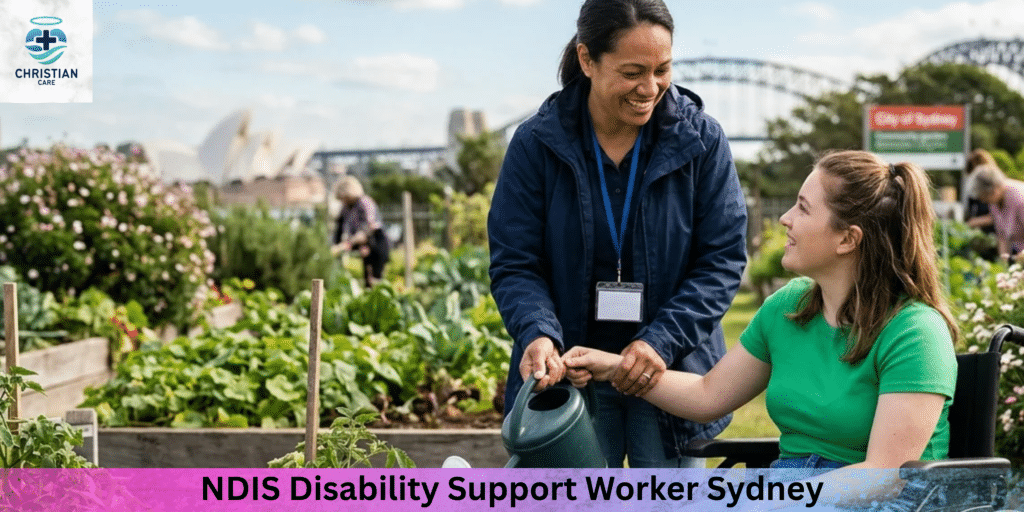
Finding the right NDIS disability support worker Sydney is about more than arranging help with everyday tasks. It is about finding someone who understands your needs, respects your choices and supports you to live as independently as possible. Whether you need assistance with personal care, household activities, community participation or developing everyday skills, the right support should fit your routine and individual goals.
Christian Care Home provides NDIS support services, including assistance with daily living and community participation. Based in Norwest, we support participants to explore suitable service arrangements based on their needs, preferences and available NDIS funding. Understanding what a support worker can do, the required screening checks and how to choose a suitable provider can help you make a more informed decision.
What does an NDIS disability support worker Sydney do?
A disability support worker is a trained person who helps you live the way you choose, at home and out in the community. At Christian Care Home, we provide a range of NDIS services to assist participants with everyday activities, independence, health needs and community involvement. Our services include:
- Personal Care: Assistance with showering, bathing, dressing, grooming, toileting, continence routines and other personal hygiene activities, delivered with respect for each participant’s privacy and dignity.
- Domestic Assistance: Help with household tasks such as cleaning, laundry, changing bed linen, meal preparation and maintaining a comfortable living environment.
- In-Home Support: Individual assistance with daily routines, household activities, personal care and other tasks that help participants manage everyday life at home.
- Community Participation: Support to attend social gatherings, recreational activities, community events, classes, appointments and other activities that encourage social connection and participation.
- Transport Assistance: Help accessing appointments, shopping, community activities and other destinations, depending on individual requirements and available transport arrangements.
- Daily Living and Skill Development: Practical assistance with cooking, shopping, budgeting, organising routines and developing skills that support greater independence.
- Community Nursing Care: Nursing services for eligible disability-related health needs, including wound care, continence and catheter care, stoma care, PEG-related support and other clinical nursing requirements.
- Support Coordination: Assistance to understand and implement NDIS plans, connect with suitable service providers, coordinate services and work towards individual goals.
- Supported Independent Living (SIL): Assistance with everyday activities and supervision for eligible participants who require support to live as independently as possible in their home.
- Specialist Disability Accommodation (SDA): Specialist housing options for eligible participants with extreme functional impairment or very high support needs.
- Short-Term Accommodation (STA): Temporary accommodation and support for eligible participants, including arrangements commonly used for respite.
- Medium-Term Accommodation (MTA): Temporary accommodation for eligible participants who have a longer-term housing solution identified but are not yet able to move into it.
- Therapeutic and Allied Health Supports: Access to relevant therapy services such as occupational therapy, speech pathology, psychology and other allied health supports, subject to current service availability.
Support is built around your goals, so two people with the same plan hours can have very different weeks.
Support workers are not nurses. Wound care, medication management and chronic condition support belong to registered nurses, which we deliver as NDIS community nursing care. Many participants use both: a support worker for daily life and a nurse for health needs.
For the wider picture, see our NDIS disability care in Sydney page. If most of your help happens at home, read about in-home support.
How are NDIS support workers screened in NSW?
People doing risk-assessed NDIS work in NSW need an NDIS Worker Check, issued through Service NSW. A clearance is typically valid for five years. Workers in child-related roles may also need a Working with Children Check.
Ask any provider how it verifies each worker’s clearance and keeps it current. A clear, quick answer is a good sign.
You can check the provider too. The NDIS Commission keeps a register of providers showing who is registered and whether a registration has been suspended or revoked. Christian Care Home is a not-for-profit registered NDIS provider,.
Qualifications vary by provider and role. Sydney job listings often ask for a Certificate III or IV in Individual Support or Disability, plus first aid and a driver’s licence for community roles.
How much does an NDIS support worker cost?
Support worker hours are usually paid from your core supports. The NDIA sets maximum hourly prices for registered providers, and they differ by time of day and type of support. The limits are reviewed each year, so check the current pricing arrangements and price limits instead of trusting a rate quoted on an old web page.
Your plan manager or NDIS support coordinator can tell you how many hours your budget covers. Also confirm whether the NDIA, a plan manager or you manage your plan, because that affects which providers you can use.
How do you choose the right support worker?
Matching is where most arrangements succeed or fail. Before you sign a service agreement, ask about:
- Routine: which days and times, and how much notice a change needs.
- Experience: work with your type of disability and support needs.
- Communication: language, cultural background and gender preferences.
- Consistency: whether you will see the same worker most weeks.
- Goals: how the worker will help you reach the goals written in your plan.
Ask for a trial shift. It costs little and shows quickly whether the fit is right. If it isn’t, ask for a different worker.
Get the details in writing too. Your service agreement should state the hourly rate, the cancellation rules and how to make a complaint. Raise any concern with the provider first. If it involves the safety or quality of your supports, you can take it to the NDIS Quality and Safeguards Commission.
Support workers near Norwest and north-west Sydney
Our office is at 1/206 Burbank Place, Norwest. We have local pages for Mount Druitt, Blacktown nursing care and Rouse Hill. Contact us to check whether we cover your suburb.
Looking for work as a support worker instead? Send your experience through our contact page.
How to get started
- Check your NDIS plan for core supports and community participation funding.
- Call 02 7251 7700 or use our enquiry form. We are open Monday to Saturday, 9 am to 5 pm.
- Tell us what you need help with and what a good week looks like.
- Meet your proposed support worker and agree a service agreement.
- Review how it is going after the first few weeks.
FAQs
What NDIS disability support worker Sydney actually do?
An NDIS disability support worker helps you with personal care, home tasks, community access, transport and skill building. The hours and tasks follow the goals in your NDIS plan, so no two arrangements look the same.
Do NDIS diability support worker sydney need a screening check in NSW?
Yes, if their role is risk-assessed. In NSW the clearance is the NDIS Worker Check, issued through Service NSW and typically valid for five years. Workers in child-related roles may also need a Working with Children Check.
How much does a support worker cost under the NDIS?
The NDIA sets maximum hourly prices for registered providers, and they vary by time of day and type of support. The limits are reviewed each year, so check the current price limits. Your plan manager or support coordinator can work out how many hours your budget covers.
Can I choose or change my support worker?
You can tell a provider your preferences for language, gender, experience and routine, and you can ask for a different worker if the fit is wrong. Ask about a trial shift before you commit to a regular roster.
What is the difference between a support worker and a nurse?
A support worker helps with daily living and community life. A registered nurse handles clinical care such as wound care and medication management. Many participants use both, and our community nursing care sits alongside our support worker services.
How do I check that a provider is NDIS registered?
Search the NDIS Commission provider register. It lists registered providers and shows whether a registration has been suspended or revoked.