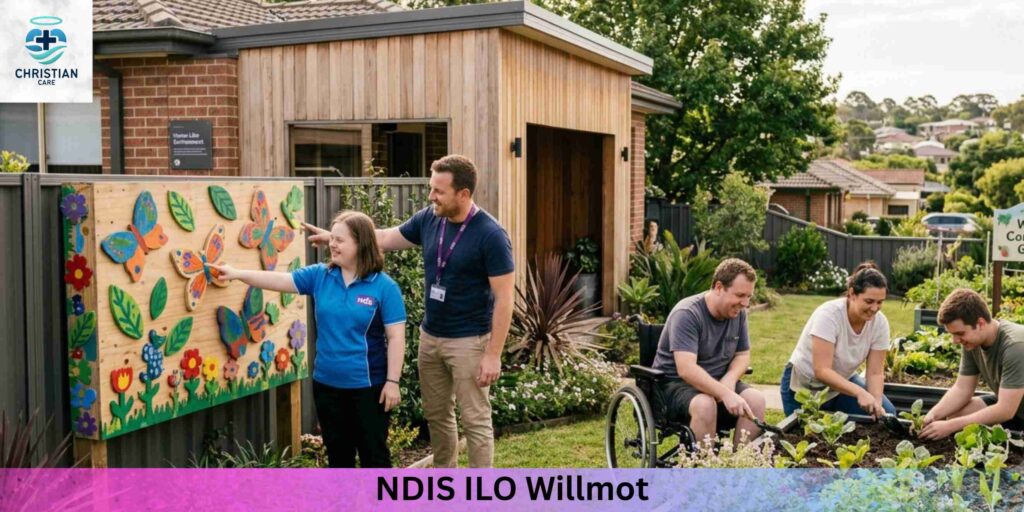
NDIS ILO Willmot help participants explore where they want to live, who they want to live with and how they would like to be supported. For people living in Willmot, NSW 2770, ILO can provide a flexible approach to creating a living arrangement that reflects their needs, preferences and goals. Christian Care, a not-for-profit NDIS provider, supports participants across Western Sydney to explore and develop individualised living arrangements, subject to their needs, service availability and NDIS funding approval.
What is an NDIS ILO Willmot?
NDIS ILO Willmot is an NDIS home and living support designed around a participant’s individual needs, preferences and goals. It gives participants greater choice in deciding where they live, who they live with and how they receive support at home.
ILO arrangements can include a host arrangement, living with a housemate or other personalised living arrangements. Support may involve assistance with personal care, household tasks, building daily living skills and managing the home. Family, friends and community networks may also contribute to the person’s support arrangements.
Who can get ILO support near Willmot?
The eligibility rules are national, so they are the same in Willmot as anywhere else. The NDIS says an ILO may suit you if you:
- are 18 or over, or 17 and thinking about future living arrangements
- need formal or informal support at home for at least six hours a day
- are ready to explore your home and living needs
- are willing to put time and effort into creating your future home
Funding decisions sit with the NDIA, so raise ILO with your my NDIS contact or planner at your next plan meeting or review.
How ILO works: two stages
Stage 1: exploration and design. The NDIS funds time with a provider to work out where and how you want to live, what supports suit you and who will deliver them. This usually takes 30 to 100 hours, depending on how much support you need. The result is a service proposal that goes to the NDIA for approval.
Stage 2: implementation. Once the proposal is approved, you set the arrangement up. Your ILO has three parts: primary supports (non-related people who live with you, such as a host or housemate), supplementary supports (paid or unpaid extras, like a support worker staying over or a family member), and regular monitoring to check the arrangement still works for you.
Choosing an ILO provider in the Willmot area
Willmot sits in the City of Blacktown, close to Whalan, Tregear, Lethbridge Park and Mount Druitt, so there are plenty of providers within reach. Ask each one:
- Are you registered with the NDIS Quality and Safeguards Commission?
- How many exploration and design plans have you taken through to approval?
- How will the arrangement be monitored, and who raises problems?
- Will you work with my support coordinator and plan manager?
The NDIS provider finder is a good place to start. One more point: payments received through an ILO may be assessable for tax, and the NDIS suggests getting independent financial advice before you agree to an arrangement.
How Christian Care supports ILO
We start with your goals, not a vacancy list. Our team helps you explore options, from a host arrangement to living with a housemate, then builds the service proposal with you and your family. We work alongside your support coordinator and plan manager, and can add social and community participation or in-home support where your plan allows. Read our full NDIS Individualised Living Options page, or contact us on 02 7251 7700.
FAQs
What does ILO stand for in the NDIS?
Individualised Living Options. It is NDIS funding for choosing where you live, who you live with and how you are supported.
Does ILO pay my rent?
No. ILO does not fund rent, mortgage repayments or everyday living costs.
How is ILO different from SIL?
SIL usually means rostered paid support in a shared home. ILO is a tailored package around one person’s chosen arrangement, often mixing paid and unpaid support.
How long does the design stage take?
ILO is an individualised home and living support arrangement that can combine primary and supplementary supports, including paid and unpaid support. Supported Independent Living (SIL) generally funds assistance with or supervision of daily tasks for participants who need support to live as independently as possible. The options differ in how support is arranged and delivered, so the best fit depends on individual needs and circumstances.
Does ILO pay my rent? No. ILO does not fund rent, mortgage repayments or everyday living costs.
Who should I speak to first? Your my NDIS contact or NDIA planner. They can explain whether ILO fits your plan and help you find a provider.