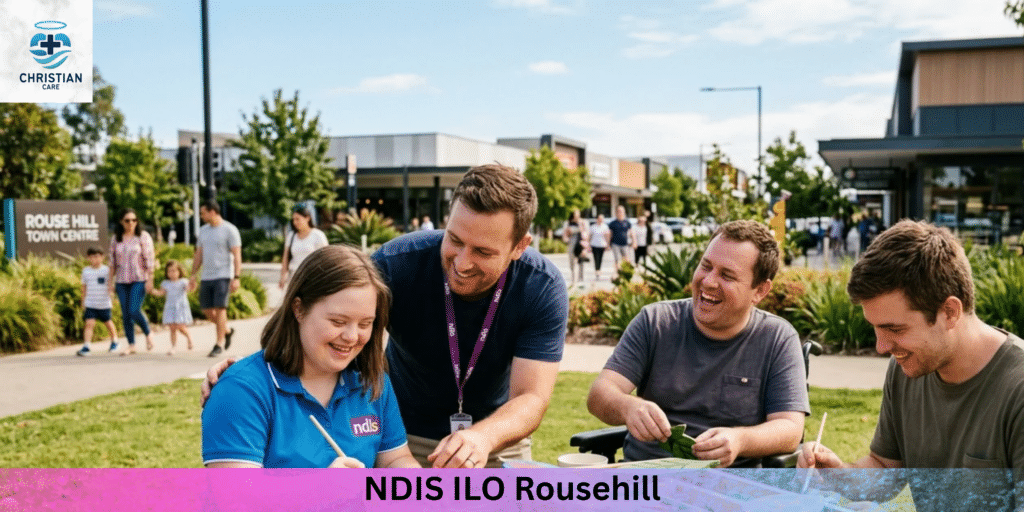
NDIS ILO Rouse Hill can help eligible participants design a living arrangement that reflects where they want to live, who they want to live with and how they want to be supported. ILO funds the support around the arrangement, not the home itself or rent. Christian Care can discuss living options and support arrangements with participants in Rouse Hill.
What is an NDIS ILO Rouse Hill?
Individualised Living Options (ILO) is an NDIS home and living support. Rather than slotting you into a vacancy, it starts with three questions: where do you want to live, who with, and what help will make it work? The NDIS explains ILO as funding that helps you choose all three.
An ILO can include help deciding on your living setup, organising your own home, personal care, building everyday skills, and household jobs like cooking and washing. Family, friends and neighbours can be part of the picture too.
What it doesn’t cover matters just as much: rent or a mortgage, food or power bills, home modifications, and activities outside the home such as work, study or sport.
Is ILO the right fit in Rouse Hill?
ILO may be suitable for people aged 18 or over, or those aged 17 who are planning their future living arrangements, who need formal or informal support at home for at least six hours each day and are willing to invest time in exploring their options. These are factors the NDIS considers when assessing suitability; funding depends on the participant’s individual circumstances and proposed living arrangement.
Rouse Hill offers access to shopping, public transport, parks and community facilities. When exploring ILO, consider how a proposed living arrangement would fit with your preferred location, relationships, daily routines and access to the services you use.
If you need regular or around-the-clock support from support workers, Supported Independent Living (SIL) may be an option to explore. Specialist Disability Accommodation (SDA) relates to specialised housing for eligible participants. ILO, SIL and SDA serve different purposes, and the right arrangement depends on your support needs, housing preferences and NDIS funding.
How ILO works: two stages
The NDIS provides Individualised Living Options (ILO) funding through two stages: Exploration and Design, followed by Supports. Each stage helps participants develop and put in place a living arrangement that reflects their preferences, goals and support needs.
Stage 1: Exploration and Design
During Stage 1, you explore where you want to live, who you want to live with and what support arrangements may work for you. You can consider options such as living with a host, sharing with a housemate or living in your own home with an individualised combination of supports.
This stage usually involves 30 to 100 hours of exploration and design, depending on your circumstances and support needs. A service proposal is then developed, outlining your preferred living arrangement and the supports required for the NDIS to consider.
Stage 2: Supports
Once the NDIS approves the proposed arrangement and funding, Stage 2 supports can be put in place. This stage has three components:
- Primary supports: The main support arrangement, which may include a host or housemate arrangement, depending on your needs and preferences.
- Supplementary supports: Additional paid or unpaid assistance that complements your primary arrangement.
- Monitoring and adjustment: Ongoing monitoring and review to identify changes needed to keep the arrangement suitable as your circumstances evolve.
ILO is designed around individual living preferences and support needs. The final arrangement and funding depend on your circumstances and the NDIS’s assessment.
What to ask an ILO provider near Rouse Hill
- Are you NDIS registered? (Verify on the NDIS Commission website.)
- Who guides stage 1, and how many hours do you expect it to take?
- How do you find and match a housemate or host, and who checks them?
- How often will you monitor the arrangement, and who do I call when something goes wrong?
The NDIS provider finder is a good starting list. The NDIS also suggests independent financial advice, because payments received through an ILO may be assessable for tax.
How Christian Care supports ILO
Christian Care can discuss your preferred living arrangement, help you explore suitable options and explain the support services it can provide. Where appropriate, we can help you prepare information about your goals and support needs for the ILO proposal. The NDIS determines whether ILO funding is included in your plan. Once the proposed arrangement is approved, supports can be put in place and reviewed as your circumstances change.
That can sit alongside in-home support, social and community participation and NDIS plan management. For more, read our guide to ILO in Sydney or the benefits of independent living options.
Ready to talk? Call 02 7251 7700 or contact our team.
Frequently asked questions
What does ILO stand for on the NDIS?
ILO stands for Individualised Living Options. It is an NDIS home and living support that helps eligible participants explore where they want to live, who they want to live with and how they want to be supported. Funding is for the supports around the living arrangement, not the home itself.
Does ILO pay for my home or rent in Rouse Hill?
No. ILO funding covers eligible supports associated with the living arrangement, rather than rent, mortgage repayments, food, utilities or the cost of the property. Home modifications are also a separate type of support and are not funded through ILO itself.
How is ILO different from SIL?
ILO allows a participant to explore an individualised living arrangement and the combination of primary and supplementary supports that may work for them. SIL provides support worker assistance and supervision with daily activities, often in a shared living arrangement. The appropriate option depends on individual support needs, preferences and NDIS funding.
Who can get ILO funding?
ILO may suit people aged 18 or over, or those aged 17 who are planning their future living arrangements, who need formal or informal support at home for at least six hours each day and are willing to invest time in exploring their options. These are factors the NDIS considers when assessing suitability. Funding depends on the participant’s individual circumstances and proposed living arrangement.
How long does the first ILO stage take?
Stage 1, Exploration and Design, usually involves around 30 to 100 hours of exploration and planning, depending on the participant’s circumstances and support needs. A service proposal is then developed for the NDIS to consider. The hours refer to Stage 1 exploration and design, not the total amount of ILO funding or daily support.
How do I find an ILO provider near Rouse Hill?
You can start by speaking with your my NDIS contact or support coordinator, if you have one, and using the NDIS Provider Finder to explore available providers. Ask about their experience with ILO, the assistance they provide during exploration and design, how they develop proposals, and how they monitor living arrangements. Confirm registration requirements and the services each provider actually offers before making a decision.